- - - zori straw sandals, see below
:::::::::::::::::::::::::::::::::::::::::::::::::::::::::::::::::::::::::::::::::::::::::::::::::::::
Geta, Wooden Sandals, Clogs, 下駄
setta 雪駄 leather-soled sandals
Straw sandals, see below.

source : www.gendaiya.co.jp/minigeta.htm
These nice little Mini-Geta have a Daruma as Decoration !
They are made from Kamakura-Bori, a kind of Laquer Art.
Look at them from the side here:
. Daruma Photo Album .
Read my full story about Kamakura Laquer Ware (kamakurabori)
. . . Kamakurabori 鎌倉彫 . . .

source : facebook
:::::::::::::::::::::::::::::::::::::::::::::::::::::::::::::::::::::::::::::::::::::::::::::::::::::
Geta from Matsunaga Town,
Fukuyama City


©松永下駄工房 Matsunaga Geta Kobo
〒729-0104
広島県福山市松永町5-16-11
. Hita geta 日田下駄 geta wooden sandals from Hita .
Hita 日田市, Oita Kyushu
:::::::::::::::::::::::::::::::::::::::::::::::::::::::::::::::::::::::::::::::::::
Now let us take a look at the wooden clogs of Japan, the GETA.
だるま下駄パリの第4区にそのお店はあります。
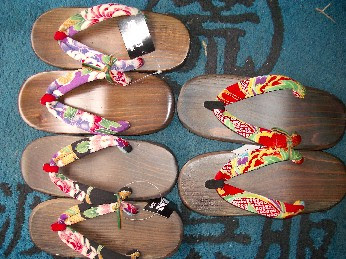
There is a store in Paris in the 4th arrondissement, called DARUMA and selling geta!
http://www.maruara.com/mall/yume005.html
::::::::::::::::::::::::::::::::::::::::::::::::::::::::::::::::::::::::::::
Geta with only one "tooth" to balance on
一本歯の下駄
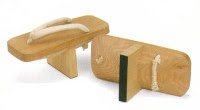
http://www.rakuten.co.jp/asakusa1393/485015/485061/#475757
:::::::::::::::::::::::::::::::::::::::::::::::::::::::::::::::::::::::::::::::::::::::::::::::::::::
The mountain goblins, TENGU, also use huge geta to run around in the mountains. At some temples and shrines, you find offerings of huge geta from people with aching legs in quest for help.

These are from Hakone, Myoojin-ga-take 明神ヶ岳 道了尊和合下駄
http://hitosh.hp.infoseek.co.jp/yamakan/hakone/myouzingatake.html
On this link you can see the same geta in heavy snow and much more about this shrine.
http://www22.tok2.com/home2/shida/05rep/05227-162.jpg
http://www22.tok2.com/home2/shida/05rep/05227-myou.html
:::::::::::::::::::::::::::::::::::::::::::::::::::::::::::::::::::::::::::::::::::::::::::::::::::
. Daiyūzan 大雄山 Daiyuzan 最乗寺 Saijo-Ji .
大雄山最乗寺 の天狗の下駄 Saijo-Ji
And the Tengu 道了大権現 Doryo Daigongen.
... Followers have donated metal geta sandals in his honor (as tengu usually wear geta). Some of them are gigantic, and it is said that if a pregnant woman walks under the largest pair, she will have an easy delivery.
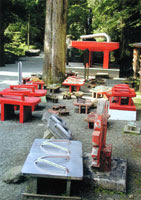
I used to visit there often and step on these large geta.
:::::::::::::::::::::::::::::::::::::::::::::::::::::::::::::::::::::::::::::::::::::::::::::::::::::
During many Tengu festivals, these one-tooth geta are still used today.

Look at more pictures of a Tengu Festival in Shimokita.
http://wandering-wind.jp/archives/2005/0130123204.php
::::::::::::::::::::::::::::::::::::::::::::::::::::::::::::::::::::::::::::::::::::::::
Here is a museum about footwear in Japan.
日本はきもの博物館
They feature the biggest geta of Japan.

実はこれ「ゲタリンピック」という地元のお祭りで使われるんです。(縄を付けてこれをみんなで引っ張るんです)
Look at Japnese straw sandals and tabi too.
http://www.kimono-taizen.com/watch/epsd_12.htm
:::::::::::::::::::::::::::::::::::::::::::::::::::::::::::::::::::::::::::::::::::::::::::::::::::::

Recently tengu geta have become more popular for previously unknown effects. They are now used for training in martial arts, for rehabilitation training, for training in mountain climbing, and are used often for teaching in school.
TENGU
This is a goblin from Japanese legend. It has a red face and a long nose. With his supernatural power he can fly freely high up in the sky. He lives high in mountain recesses. His hand has a feather fan that can make a strong gale wind, and his feet have “Ipponba-geta (one-tooth-geta)".
- source : www.karankoron.com -
:::::::::::::::::::::::::::::::::::::::::::::::::::::::::::::::::::::::::::::::::::::::::::::::::::::
An orchester of cats in front of the Huge Geta of Daikannon-Temple at Sakakibara Onsen.
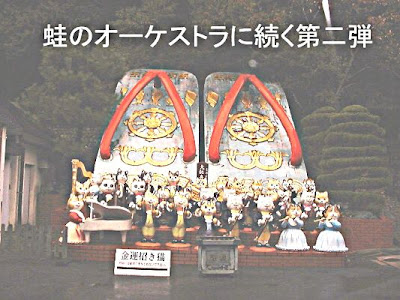
猫のオーケストラ!それも巨大下駄の前で楽器を弾いているのだ。
「大観音寺」
http://toshi686-web.hp.infoseek.co.jp/tyousa/daikannon/
:::::::::::::::::::::::::::::::::::::::::::::::::::::::::::::::::::::::::::::::::::::::::
Look at great pictures of a fire festival in honour of Kurama Tengu.
Thanks to Wada san!
鞍馬の火祭り Kurama no Hi-Matsuri
http://wadaphoto.jp/japan/kurama2.htm
Here is my story about Tengu and Daruma
http://darumasan.blogspot.com/2004/11/tengu-and-daruma.html
:::::::::::::::::::::::::::::::::::::::::::::::::::::::::::::::::::::::::::::::::::::::::::::::::::::::
. tsurushibina, tsurushi bina つるし雛 / 吊るし雛 small hanging hina dolls .

CLICK for more photos!
Made with the wish that the child will soon learn to walk and have healthy legs all its life.
:::::::::::::::::::::::::::::::::::::::::::::::::::::::::::::::::::::::::::::::::::::::::::::::::::::
. getaya 下駄屋 craftsman making Geta in Edo .
geta haireya, ha-ireya 下駄歯入れ屋 Geta repairman
with Senryu
getaya no kanban 下駄屋の看板 shop sign of a Geta store
geta shinmichi 下駄新道 Geta New Road in Kanda
Legends about Geta
.......................................................................
. yookai, yōkai 妖怪 Yokai monsters – ABC-List .
bakezoori 化け草履 Bakezori, Yokai sandals, Sandal Yokai

from Hyakki Yagyō Emaki
The Bakezōri is described as a wandering sandal with two arms and two legs, but only one eye.
A kind of tsukumogami 付喪神.
- - - More in the WIKIPEDIA !
:::::::::::::::::::::::::::::::::::::::::::::::::::::::::::::::::::::::::::::::::::::::::::::::::::::
. . . . . . . . HAIKU
Day of the Geta, July 7.
This would be a lovely KIGO for Summer.
. . . . .
humanity kigo for mid-summer
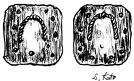
tageta, ta-geta 田下駄 (たげた) geta for the fields
..... ooashi 大足(おおあし)"big feet"
shirofumigeta 代踏み下駄(しろふみげた)
geta to step into the rice paddies
mizugeta 水下駄(みずげた) "water geta"
to step into the wet rice fields
They were made of wood, with a larger bottom part to walk easier in the slippery mud fields. They were used when planting rice by hand in the wet paddies.
. Rice planting and related KIGO
:::::::::::::::::::::::::::::::::::::::::::::::::::::::::::::::::::::::::::::::::::::::::::::::::::::
雪の朝二の字二の字の下駄の跡
yuki no asa ni no ji ni no ji no geta no ato
snowy morning -
footprints of wooden sandals
two lines, two lines again
Den Sutejo (1633-1698)
(Tr. Gabi Greve)

The first part of the kanji compound, 二の字, the 二 looks like two lines in the snow.

source : ameblo.jp/ykearth
:::::::::::::::::::::::::::::::::::::::::::::::::::::::::::::::::::::::::::::::::::::::::::::::::::
cold winter day -
the back and front of
human nature
GETA by Gabi Greve

:::::::::::::::::::::::::::::::::::::::::::::::::::::::::::::::::::::::::::::::::::::::::::::::::::
Oku no Hosomichi - - - Station 7 - Kurobane 黒羽 - - -
. Matsuo Basho 松尾芭蕉 - Archives of the WKD .
夏山に足駄を拝む首途かな
natsuyama ni ashida o ogamau kadode kana
in the summer mountains
praying before the clogs:
setting off
Tr. Barnhill
An earlier version:
natsuyama ya kadode ni ogamu taka-ashida
summer mountains--
at departure praying
to the high clogs
Tr. Barnhill
Ad G. Blankestjin notes:
After Basho's timely visit to Unganji, the rains kept falling for several days. From the 6th to the 8th, he was not able to leave Choboji's house. On the 9th, however, he decided to go out in the rain and was taken to Komyoji, a shugendo temple in the fields on the east side of the town. This temple was famous for its Gyoja Hall, a hall dedicated to En no Gyoja, the legendary founder of the ascetic mountain Buddhism.
The 'ashida' mentioned in the poem (here translated as clogs) are a special kind of high geta, worn by those monks when practicing austerities. To make walking difficult, these geta had only one support instead of the normal two. The temple probably housed a statue of En no Gyoja wearing such high clogs.
Basho prays in front of them, wishing for strong feet and legs himself at the start of his long journey. Unfortunately, Komyoji was destroyed at the beginning of the Meiji period. The haiku stone stands forlorn in the high grass.
(Basho haiku stone)
(C) Ad G. Blankestjin
off the beaten path--
a prayer to the high clogs
standing in tall grass
Larry Bole, USA, April 2008
夏の夜や木魂に明る下駄の音
natsu no yo ya kodama ni akuru geta no oto

ashinaka 足半 "half foot" straw sandals
草履の尻折りて帰らん山桜
zoori no shiri orite kaeran yama-zakura
I fold the straw sandals
into half and walk home -
mountain cherry blossoms
Tr. Gabi Greve
Written in 延宝7年, Basho age 36.
Walking in the rain of spring, Basho considers to fold (oru) his straw sandals, because otherwise they would splash the mud of the road on his robes.
To fold the sandals or use smaller ones anyway (ashinaka 足半) was quite common in these days.
And maybe break (oru) a branch of the mountain cherries , since they will soon be damaged by the rain anyway.
A typical poem of the Danrin haikai school. It shows Basho in high spirits even when walking in the spring rain.
:::::::::::::::::::::::::::::::::::::::::::::::::::::::::::::::::::::::::::::::::::::::::::::::::::
下駄の痕残る渚や誓子の忌
geta no ato nokoru nagisa ya Seishi no ki
the imprints of geta
are still visible on the beach -
memorial day of Seishi
Kobayashi Seiha 小林青波
Yamaguchi Seishi 山口誓子
:::::::::::::::::::::::::::::::::::::::::::::::::::::::::::::::::::::::::::::::::::::::::::::::::::
:::::::::::::::::::::::::::::::::::::::::::::::::::::::::::::::::::::::::::::::::::::::::::::::::::
Straw sandals, zoori, zôri 草履
one of the many necessities for a traveler in the Edo period.
waraji 草鞋 わらじ straw sandals (for travellers)
warazoori 藁草履 straw sandals
take no kawa zoori 竹の皮草履 sandals from bamboo skin
gonzoo ごんぞう / 権蔵 gonzo straw sandals
zunbe ずんべ straw sandals
zoori were used for the everyday work in a farming home. They had only a part to slip between the big toe and second toe for keeping in place.
waraji were used for work in the forest and by travellers.
They had a special back part to hold on to the foot when walking a lot or walking on forest slopes. The heel part had a rope to bind around the ankle.


zoori were made by all farmers, and many were made in the winter months, to be used in busy times. There were also peddlers for zoori in Edo (zooriya 草履屋), who sold their ware to travellers.
zooriya is also the name for a shop that sells sandals. Nowadays they are made of various materials.
. . . CLICK here for Photos !
. Edo no shokunin 江戸の職人 Edo craftsmen .

zoori shokunin 草履職人 craftsmen making sandals
. Recycling and Reuse in Edo - リサイクル .
. waraji no omamori わらじお守り straw sandal amulets .
for strong legs

how to wear WARAJI
.......................................................................
uwazoori 上草履 indoor sandals

初雪や今おろしたる上草り
hatsu yuki ya ima oroshitaru uwazoori
first snow --
I just put on new
indoor sandals
This hokku is from the tenth lunar month (November) of 1819, the year evoked in Issa's Year of My Life. Indoor sandals in farm villages were generally woven from rushes, straw, old cloth, the outer sheathing of bamboos, and similar materials and were used for walking in areas inside a house that had board floors rather than straw floor matting, in much the way slippers are worn in contemporary Japan. In the previous hokku in Issa's diary he writes of an indoor sandal (or sandals) that has fallen off the low porch under the eaves of his house while the first snow falls.
In the present hokku, Issa, perhaps standing on the same low wooden porch running under the eaves of his house, seems to be struck by a feeling of simultaneity, since he has put on a fresh new pair of indoor sandals -- because his old ones were wet? -- just as the first snow of the winter is falling outside. Does he sense the freshness of the new snow with his feet?
Chris Drake
. Kobayashi Issa 小林一茶 in Edo .
.......................................................................
大草履ひたりひたり村時雨
oo zoori hitari-hitari mura shigure
big straw sandals
pitter-patter...
hard winter rain
This haiku has an irregular middle phrase of six, not the usual seven, syllables: hitari-hitari. In the previous year (1823), Issa writes a similar haiku:
dooshin boo ya zoori hita-hita mura shigure
Priest Doshin's straw sandals pitter-patter...
hard winter rain
In both haiku the expression, mura shigure, signifies winter rain that passes through strongly and incessantly; Kogo dai jiten (Shogakukan 1983) 110; 1603.
Kobayashi Issa
Tr. Lanoue
門々の下駄の泥より春立ちぬ
かどかどのげたのどろよりはるたちぬ
kado kado no geta no doro yori haru tachinu
geta at the gate
. geta at the gate ...
:::::::::::::::::::::::::::::::::::::::::::::::::::::::::::::::::::::::::::::::::::::::::::::::::::
. Yosa Buson 与謝蕪村 in Edo .
夏川を越す嬉しさよ手に草履
natsukawa o kosu ureshisa yo te ni zôri
so happy
to cross this summer river -
sandals in my hand
Tr. Gabi Greve / Joy and Haiku
花を踏みし草履も見えて朝寝哉
hana o fumishi zoori mo miete asane kana
after treading on cherry petals
I can even see her straw sandals
sleeping late in the morning . . .
Maybe after an encounter with a lady ?
- - - - - or
after treading on cherry petals
I can even see my straw sandals
sleeping late in the morning . . .
Maybe he spent the night somewhere in Kyoto and is now waking up not in his own bed . . .
. asane 朝寝 (あさね) sleeping late in the morning .
kigo for all spring
:::::::::::::::::::::::::::::::::::::::::::::::::::::::::::::::::::::::::::::::::::::::::::::::::::::
New Year comes!
Daruma's worn sandals
replaced
Chibi
Look at the BIG SANDALS here !
Daruma carrying one sandal
:::::::::::::::::::::::::::::::::::::::::::::::::::::::::::::::::::::::::::::::::::::::::::::::::::::::::::::::::::::::::::
kamizoori, kami zoori 紙草履 / 紙ぞうり Kamizori
sandals made from paper
They were made from strong, waterproof Washi paper.
Once they are torn, they could be used in the garden as fertilizer.

とぶ蝶に追抜れけり紙草履
tobu choo ni oi-nukare keri kami zôri
a flitting butterfly
outstrips me...
paper sandals
Tr. David Lanoue
. Kobayashi Issa 小林一茶 .
Cultural keywords and kigo used by Issa
:::::::::::::::::::::::::::::::::::::::::::::::::::::::::::::::::::::::::::::::::::::::::::::::::::::::::::::::::::::::::::
setta 雪駄 leather-soled sandals for men
some come with a tatami cushion

CLICK for more photos !
- quote -
'setta' is one of the Japanese traditional sandals.
Japanese people were sandals called ''zori'' or ''setta'' until western-style shoes spread after the Meiji era. Of course, samurai, too. These Japanese sandal has created a beautiful Japanese-style posture and walking form by sandwiching the string called ''hanao'(鼻緒) between toes. Those posture and how to walk bring the influence that is good for the budo and martial arts including fencing (kenjitsu) and jujustu of Japan.
''Setta'' is said that Sen no Rikyū who is famous for tea ceremony devised it. The upper part is made of a rattan and bamboo, and leather is used for the bottom and it is characterized by thinner than ''zori''.
- source with photos : Osami Kitazono / facebook
setta naoshi 雪駄直し repairing setta sandals

Since setta were rather expensive in Edo, they would be repaired many times and never just thrown away. There were many repairmen in Edo, Kyoto, Osaka and other big cities.
Some walked around from house to house, others sat by a busy roadside and waited for customers.
In Edo they called dei dei でいでい, deei deei でえい、でえい, (local dialect for teire, te-ire 手入れ to repair)
in Kyoto and Osaka it was naoshi naoshi はおしなおし.
Therefore the setta sandals were also called deidei in Edo.
. - - - Welcome to Edo 江戸 ! .
:::::::::::::::::::::::::::::::::::::::::::::::::::::::::::::::::::::::::::::::::::::::::::::::::::::::::::::::::::::::::::

Snow-Clogged Geta
Suzuki Harunobu 鈴木春信 (1725-1770)
.......................................................................
pokkuri ポックリ wooden sandals for ladies
especially for young geisha in Kyoto

source and more photos : Klara Field

CLICK for more photos !
- and as an amulet for beautiful legs from
香取神社 Katori Jinja
健康美脚のお守り
okobo おこぼ okobo pokkuri for maiko

source : pooch.exblog.jp

CLICK for more photos !
koppori こっぽり amulets to prevent evil for Maiko girls
- - - - - Not to mix with
. pokkuri ぽっくり amulets for a sudden death, "drop dead" .
:::::::::::::::::::::::::::::::::::::::::::::::::::::::::::::::::::::::::::::::::::::::::::::::::::::
. 幸福地蔵 Jizo for Good Luck .
He is the only Jizo wearing straw sandals in Japan.
[ . BACK to WORLDKIGO TOP . ]
[ . BACK to DARUMA MUSEUM TOP . ]
:::::::::::::::::::::::::::::::::::::::::::::::::::::::::::::::::::::::::::::::::::::::::::::::::::::




 Posts
Posts




25 comments:
Why can't we all -- "geta" long? * grin *
Chibi
The Day of the Geta
July 7.
1990(平成2)年の全国大会で日田木製履物連合会が提案し、1991(平成3)年に全国木製はきもの業組合連合会が制定しました。
昔は、男物の下駄は7寸7分、女物の下駄は7寸2分と決まっていたので、7月の7は下駄の寸法から、また22日は下駄の歯形が漢数字の「二」とよく似ていることにちなんでいます。
The measure of geta in olden times was 7 sun 7 bun for men.
http://hukumusume.com/366/kinenbi/pc/07gatu/7_22.htm
................................
.
in my wooden clogs
raising a racket!
winter moon
ware hakeba oto seru geta zo fuyu no tsuki
.我はけば音せる下駄ぞ冬の月
by Issa, 1816
Tr. David Lanoue, http://cat.xula.edu/issa/
::::::::::::::::::::::::::::::::::::::::::::::::::::::::::::::::::::::
spring breeze--
on the fence a pair
of red sandals
haru kaze ya toaru kakine no aka zoori
.春風やとある垣根の赤草履
by Issa, 1820
Tr. David Lanoue
http://cat.xula.edu/issa/
Wow.. Really a great sandals design..
Well done job :-)
toward the sound
of lacquered clogs
cherry blossoms scatter
nurigeta no hoお^ e to sakura chiri ni keri
.塗下駄の方へと桜ちりにけり
by Issa, 1818
This haiku refers to the clonking of the wooden clogs (geta) that the blossom-viewers are wearing. Robin D. Gill writes that the clogs are almost certainly an allusion to odori-ko, the shamisen-playing dancing girls who were noted for "falling" (koboru) now and then for additional income but regarded more highly than the women indentured = imprisoned in the pleasure quarters, for as one senryu put it, 'lacquered geta are a higher place than a lacquered pillow'."
David Lanoue
.
Matsuo Basho
年暮れぬ笠着て草鞋はきながら
toshi kurenu kasa kite waraji hakinagara
another year is gone--
a traveler's hat on my head
straw sandals on my feet
Tr. tr. Ueda
Matsuo Basho
あやめ草足に結ん草鞋の緒
ayamegusa ashi ni musuban waraji no o
irises in bloom
let me tie around my feet
the cords of the sandals
Matsuo Basho,
Sendai, Oku no Hosomichi
.
Matsuo Basho
西行の草鞋もかかれ松の露
Saigyoo no waraji mo kakare matsu no tsuyu
Saigyo's sandals:
hang them as well
with the pine's dew.
Tr. Barnhill
Kokeshi on Sandals !
草履の尻折りて帰らん山桜
zōri no shiri / ori te kaera n / yama-zakura
Matsuo Basho
Yosa Buson
春雨やゆるい下駄かす奈良の宿
harusame ya yurui geta kasu nara no yado
(1780)
spring rain -
they lend me loose woooden sandals
at the inn in Nara
MORE
about spring rain
Kobayashi Issa
下駄はいて畠歩くや兄方詣
geta haite hatake aruku ya ehoo mairi
wearing nice clogs
in a vegetable patch --
this year's lucky direction
Tr. Chris Drake
MORE
about the lucky direction
.
gomen geta ごめん下駄 wooden clogs
special clogs from Nikko 日光
.
waraji no ema わらじの絵馬 votive tablet with straw sandals
waraji omamori わらじ守り(健脚)amulet for strong legs
.
Uji Jinja 宇治神社 - Ise, Mie
waraji わらじお守り straw sandal amulets
from
Fukagawa Fudo Do (Fudoo Doo) 深川不動堂
Tokyo
Fukagawa
waraji amulets from
Hakusan Guu 白山宮足王社 Hakusan shrine and
Ashioo Sha 足王社and Ashi-O Shrine "for the deity of strong legs"
Aichi
Kobayashi Issa
わらじ売窓に朝寒始りぬ
waraji uru mado ni asa-zamu hajimarinu
a sandal vendor
at the window, morning's
cold beginning
Tr. David Lanoue
Ashiato Animal Footprint Sandals
"Ashiato" means footprint in Japanese. In any language, kids can make their mark with these wildly fun sandals from Kiko+ founding designer Kaz Shiomi. The creative Kaz based her idea on the geta, a form of traditional Japanese footwear that is a cross between a clog and flip-flops. These wooden geta are fun for the beach or any dirt patch where kids can step out and be kids. Made of rubber and FSC pine wood (100% well-managed forests!).
ASHIDA clogs -
芦田 あらい丸 女月尼 Ashida - Araimaru and Nyogetsu-Ni
at
Ashida-shuku 芦田宿 Postal Station Ashida
Kiso Kaido Road
.
薫風や鼻緒のゆるき有楽苑
kunpuu ya hanao no yuruki yuurakuen
this fragrant breeze -
the loose string of my sandal
at Yuraku-En
Satoo Mieko 佐藤美恵子 Sato Mieko
.
more about Yurakuen and Oda Urakusai Nagamasu 織田有楽斎長益
.
Kobayashi Issa
わらぢ売る木陰の爺が清水哉
waraji uru kokage no jiji ga shimizu kana
selling straw sandals
in the shade, an old man...
pure water
(Tr. David Lanoue)
.
Yosa Buso - zoori
古池に草履沈みてみぞれかな
furu-ike ni zoori shizumite mizore kana
In an old pond
a straw sandal half sunken --
wet snow!
Tr. Shiffert
Straw sandal
half sunk in an old pond
in the sleety snow.
Tr. Robert Hass
.
bake-zoori 化け草履 Yokai sandals
.
https://kappapedia.blogspot.jp/2015/01/haiku-about-yokai.html
.
waraji - zoori 草鞋- 履 と伝説 Zori, Legends about straw sandals
even with Tengu . . .
.
https://heianperiodjapan.blogspot.jp/2016/05/waraji-and-zori-sandals.html
.
waraji matsuri わらじまつり festival of the huge straw sandals
.
Fukushima
https://wkdfestivalsaijiki.blogspot.com/2012/05/fukushima.html
.
Post a Comment